Colombian Food: 25 Colombian Cuisine & Street Food to Try in Colombia
Colombian food is colorful, hearty, and as diverse as the landscapes that shape it. From the cool Andean highlands to the sunny Caribbean coast, every region has its own unique dishes and flavors. When I first tried Colombian cuisine, I realized quickly that food here isn’t just about eating. It’s a reflection of culture, history, and tradition.
In this guide, you’ll discover 25 of the most famous Colombian dishes and street foods you need to try. We’ll cover everything from national meals like bandeja paisa to beloved street snacks like arepas and empanadas. You’ll also learn about desserts, drinks, and the traditions that bring food to life in Colombia. Whether you’re planning a trip or just curious about what Colombians eat every day,
This Colombian food guide is just one slice of the South American experience. For a complete overview of itineraries, cultural highlights, and hidden gems across 12 countries, check out my [Ultimate South America Travel Guide].
What Is Colombian Cuisine Known For?
Influences on Colombian Cuisine (Spanish, Indigenous, African)
Colombian cuisine is a blend of cultures. The Spanish colonists brought ingredients like rice, pork, and wheat. Indigenous communities introduced corn, potatoes, cassava, and local herbs such as guasca. African influences added cooking methods, plantains, and flavors like coconut milk, which now define many dishes from the Caribbean coast. This mix makes Colombian food unique, flavorful, and full of variety.
Regional Food Diversity: Andes, Caribbean, Pacific, Llanos
Each part of Colombia has its own specialties:
- Andean region (Bogotá, Medellín): known for hearty soups like ajiaco and stews like sancocho.
- Caribbean coast (Cartagena, Santa Marta): known for its fresh guava and lime flavors. famous for seafood, fried fish, and coconut rice.
- Pacific coast: rich in Afro-Colombian traditions with dishes like encocado de camarones (shrimp in coconut sauce).
- Los Llanos (plains): home to roasted meats like ternera llanera.
This regional diversity means there isn’t one single “Colombian dish”; instead, there’s a whole spectrum of foods that reflect geography and culture.
What Food Is Colombia Known For Internationally?
When travelers think of Colombian food, certain dishes always stand out. Bandeja paisa is the country’s national dish, while arepas are found everywhere from street stalls to breakfast tables. Colombian coffee is world famous, and traditional soups like ajiaco have become iconic.
Why Colombian Food Is Considered Hearty and Authentic
Colombian meals are generous and comforting. Plates are often filled with rice, beans, meat, plantains, and avocado. A full combination that feels like a meal and a celebration in one. The food is not overly spicy; instead, it focuses on rich flavors, slow cooking, and fresh ingredients. This authenticity is why many travelers say Colombian cuisine feels like eating “food made with love.”
| Category | Dish/Drink | Region | Why Try It |
|---|---|---|---|
| National Dish | Bandeja Paisa | Antioquia (Medellín) | Hearty platter with beans, rice, meat & plantains |
| Traditional Soup | Ajiaco | Bogotá (Andes) | Comforting chicken & potato soup with guascas herb |
| Festive Dish | Lechona | Tolima | Whole roasted pork stuffed with rice & peas |
| Street Food | Arepas | Nationwide | Corn cakes — grilled, fried, or stuffed |
| Street Food | Empanadas | Nationwide | Crispy pastries filled with beef, chicken, or cheese |
| Street Snack | Arepa de Huevo | Caribbean Coast | Corn cake stuffed with egg & fried |
| Street Food Mix | Salchipapas | Nationwide | French fries topped with sausage, cheese & sauces |
| Cheese Snacks | Buñuelos & Pandebonos | Nationwide | Fried cheese balls & baked cheese breads |
| Seafood Dish | Cazuela de Mariscos | Caribbean Coast | Rich seafood stew with coconut milk |
| Breakfast | Changua / Caldo de Costilla | Bogotá & Andes | Traditional morning soups for energy |
| Dessert | Tres Leches Cake | Nationwide | Soft sponge cake soaked in three types of milk |
| Sweet Treat | Postre de Natas | Bogotá | Creamy layered dessert made from milk skin |
| Drink | Colombian Coffee | Coffee Region | World-famous rich aroma & smooth taste |
| Drink | Aguardiente | Nationwide | Anise-flavored spirit, Colombia’s national liquor |
| Drink | Aguapanela | Nationwide | Sweet sugarcane drink served hot or cold |
| Drink | Fresh Fruit Juices | Nationwide | Exotic tropical fruits blended into refreshing juice |
What Are Traditional Colombian Foods and Authentic Dishes?
Colombian cuisine is rich in flavors, history, and traditions. Some dishes are so iconic that they are tied directly to the nation’s identity. Below are the foods every traveler should try to truly experience Colombia.
Bandeja Paisa – Colombia’s National Dish
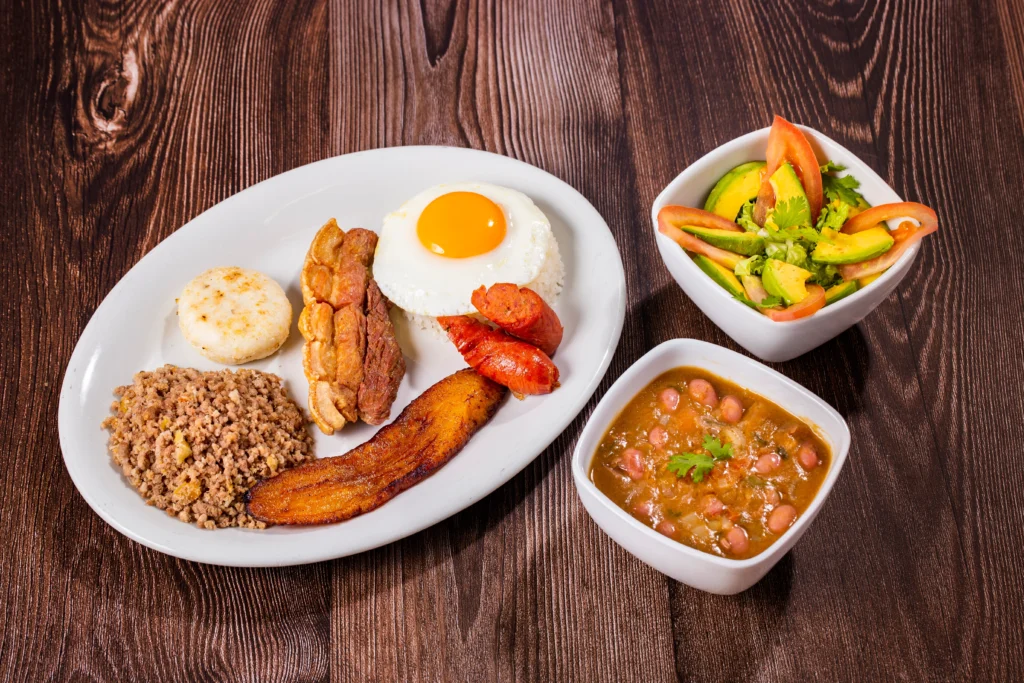
Known as Colombia’s national dish, the Bandeja Paisa is more than just a meal. It’s a feast. This hearty platter usually includes rice, red beans, ground beef, chorizo, fried plantain, avocado, arepa, chicharrón (fried pork skin), and a fried egg on top.
Originating from the region of Colombia. Antioquia region, it represents the hardworking Paisa culture. The combination of meats, beans, and carbs makes it filling enough to fuel a long day in the mountains. Today, it’s enjoyed across the country and is often the number one dish Colombians recommend to visitors.
Ajiaco – Traditional Andean Soup
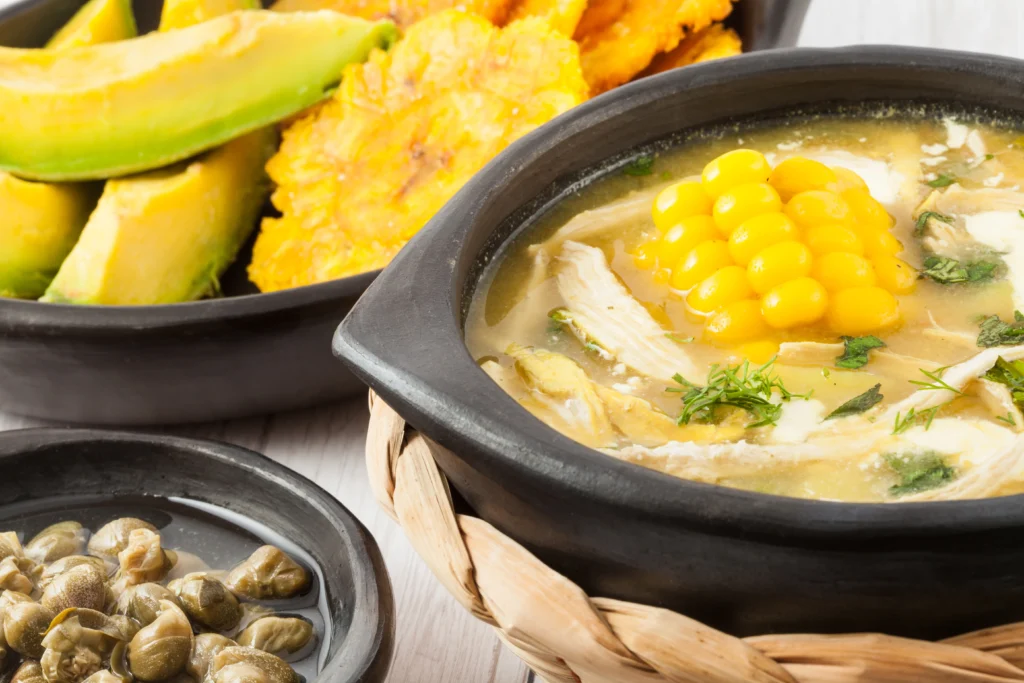
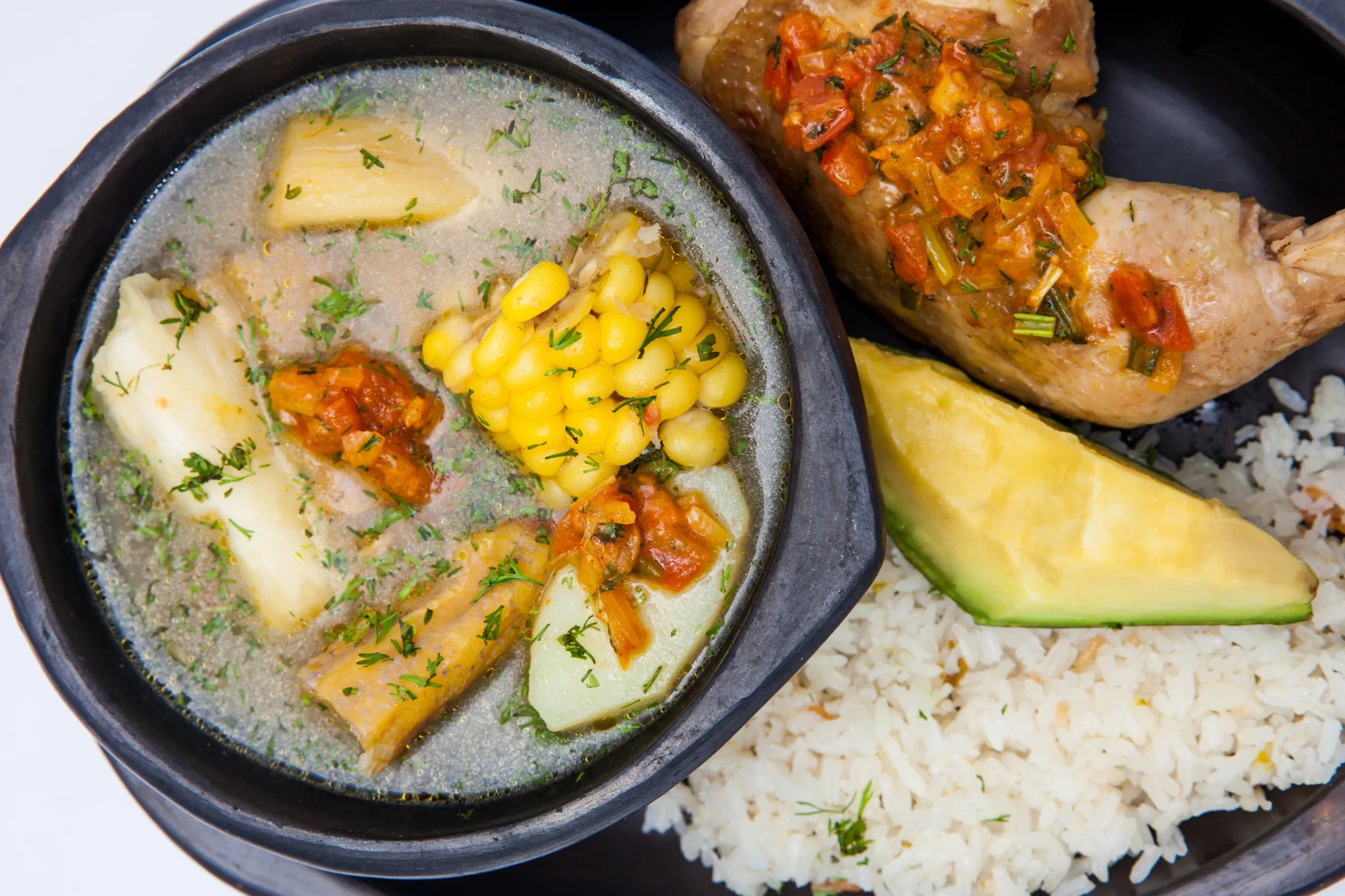
Ajiaco is a famous Andean chicken soup from Bogotá. Made with three types of potatoes (criolla, sabanera, and pastusa), chicken, corn on the cob, and the herb guascas, it’s thick, flavorful, and perfect for cold highland weather.
Ajiaco is typically served with rice, avocado, and capers on the side, allowing diners to customize each bite. It’s more than soup. It’s comfort in a bowl and one of the best examples of Colombian regional cuisine.
Lechona – Festive Roast Pork
If you visit Colombia during a festival or family gathering, chances are you’ll find lechona on the table. This traditional dish from Tolima features a whole pig stuffed with rice, peas, onions, and spices, then slow-roasted until the skin turns crispy.
It’s often cooked for hours and shared among dozens of people, making it a true celebration dish. The rich flavors of roasted pork mixed with the soft rice filling show why lechona is a Colombian culinary treasure.
Tamales Tolimenses – Wrapped in Banana Leaves
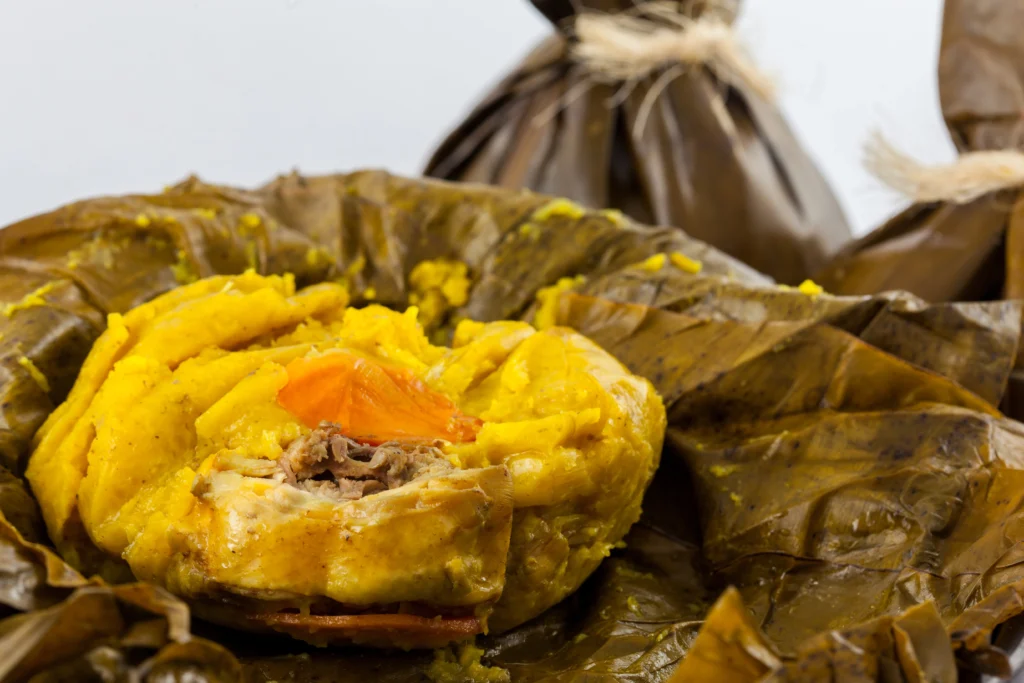
Tamales are popular across Latin America, but Colombia has its own special variety: Tamales Tolimenses. These are made with corn dough (masa) filled with chicken, pork, carrots, peas, and rice, all wrapped in banana leaves and steamed.
The banana leaves not only keep the tamales moist but also give them a smoky, earthy flavor. They’re often eaten at Christmas, family birthdays, or Sunday breakfasts with a hot cup of chocolate or coffee.
Fritanga – Mixed Meats and Plantains
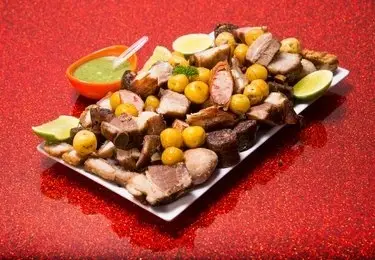
For meat lovers, fritanga is a must-try. This dish is a hearty mix of grilled or fried meats. like chorizo, morcilla (blood sausage), beef ribs, and chicken. served with b
It’s usually eaten as a group meal, often ordered at street stalls or countryside restaurants. Fritanga shows how Colombian food combines simple ingredients into dishes that feel like a feast.
Cazuela de Mariscos – Coastal Seafood Stew
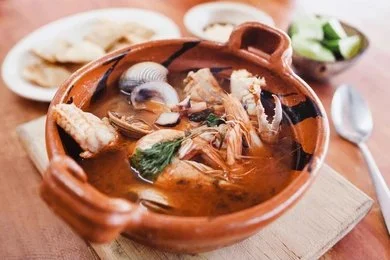
On the Caribbean coast, one of the most loved dishes is Cazuela de Mariscos. This creamy seafood stew is made with shrimp, clams, squid, and fish, simmered in coconut milk, cream, and vegetables.
It’s served hot in clay bowls, often accompanied by coconut rice and patacones. Rich, flavorful, and deeply tied to coastal identity, this dish reflects the abundance of seafood and Caribbean influence in Colombian cuisine.
Colombia’s coastal cities like Cartagena and Santa Marta, not only serve the best seafood in the country but also rank among the most beautiful destinations in South America. If you’re planning your route, my [Top 25 Places to Visit in South America] guide highlights how food, culture, and scenery come together across the continent
What Are the Types of Colombian Food: Main Dishes & Meals?
Colombian cuisine isn’t just about iconic dishes like bandeja paisa or ajiaco. It’s also about the way food is eaten every day. Meals are deeply tied to family traditions, regional customs, and the Colombian lifestyle.
Typical Colombian Meals: Breakfast, Lunch, and Dinner
In Colombia, meals follow a rhythm that reflects both tradition and practicality:
- Breakfast (desayuno): Usually hearty, with items like arepas, caldo de costilla (beef rib soup), changua (milk and egg soup), or fresh tropical fruit. In many regions, it’s paired with hot chocolate or coffee.
- Lunch (almuerzo): The main meal of the day. A full lunch often includes soup, a main dish of rice, beans, meat or chicken, plantains, salad, and fresh juice. It’s common for workplaces and schools to break midday for lunch with family.
- Dinner (cena): Lighter and varies by region, could be empanadas, tamales, arepas with cheese, or hot soup in colder areas.
This structure shows how Colombians balance nutrition, flavor, and tradition across the day, accompanied by traditional dishes in Colombian cuisine.
Colombia’s National Dish and Family Meal Culture
The bandeja paisa isn’t just Colombia’s national dish. It’s a reflection of family meal culture. Meals in Colombia are often complemented by a side dish of dulce de leche. shared with relatives and friends, making them social events.
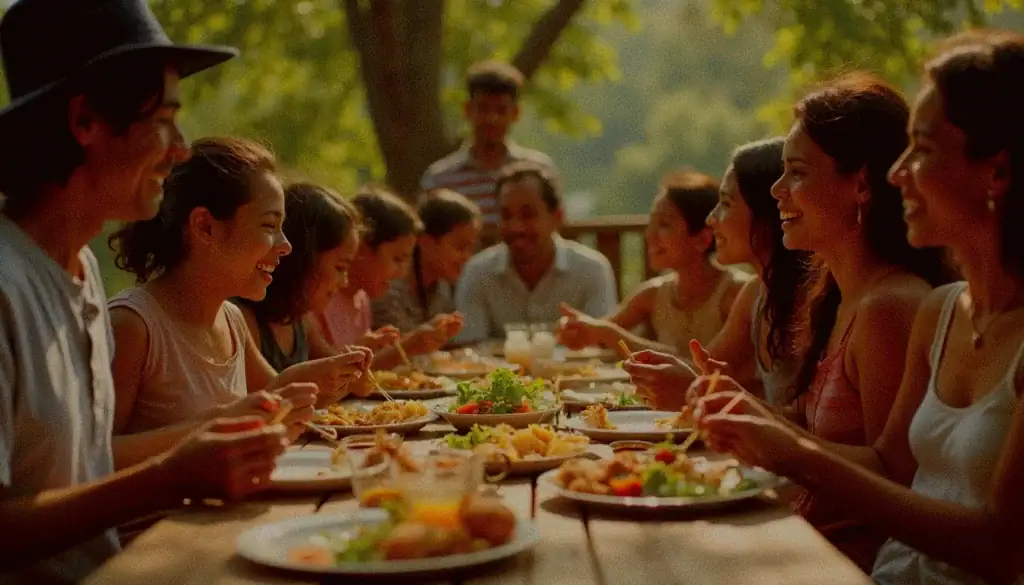
Family gatherings, holidays, and even casual Sundays are marked by big spreads of lechona, sancocho, or fritanga, eaten together at large tables. This culture of sharing food highlights the importance of community in Colombian life.
Colombian Entrees and Everyday Staples
Every Colombian kitchen has its staple foods. the building blocks of daily meals:
- Rice and beans (often red or black beans)
- Arepas (corn cakes, eaten plain or with cheese, butter, or eggs)
- Plantains (fried as patacones or sweet as maduros)
- Soup (ajiaco, sancocho, or caldo de costilla)
These staples appear in both simple home-cooked meals and restaurant menus across the country. They bring comfort, consistency, and a taste of tradition.
Common Colombian Foods Eaten Across Regions
While each region has its specialties, certain foods unite Colombians everywhere:
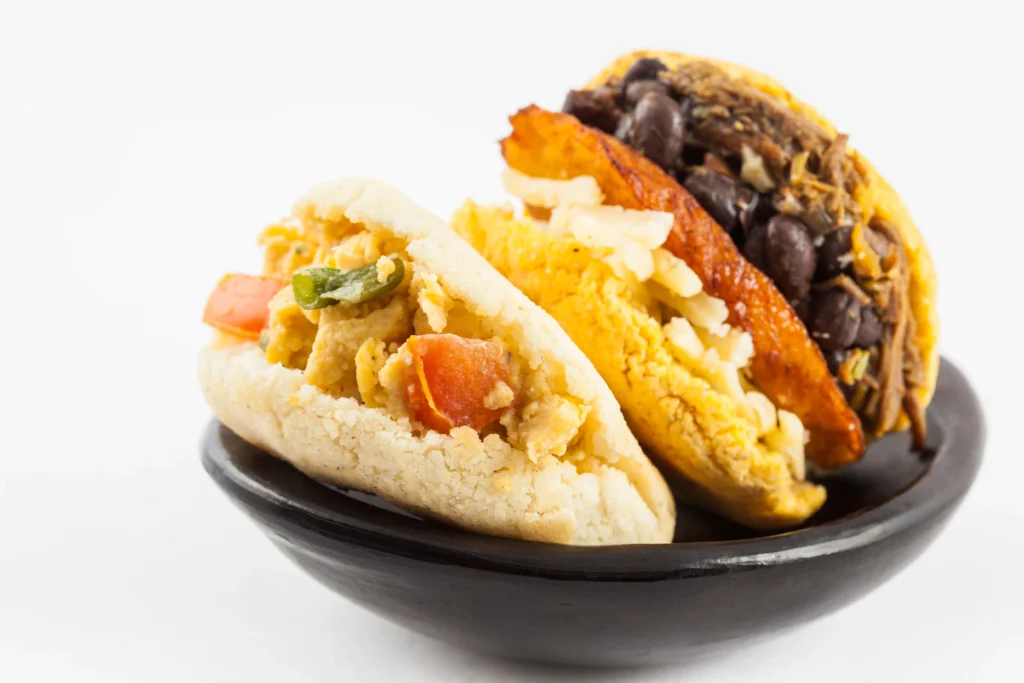
- Arepas: Prepared differently in Antioquia, Bogotá, or the coast, but eaten nationwide.
- Empanadas: Street food classics, often filled with beef, chicken, or cheese.
- Sancocho: A meat and vegetable stew enjoyed from the Caribbean coast to the Andes.
- Buñuelos and pandebonos: Cheese-based snacks popular during Christmas and family gatherings.
These foods show the cultural diversity of Colombia, yet also how certain dishes remain universal symbols of Colombian identity.
What Are Colombian Street Food and Regional Specialties?
Street food in Colombia isn’t just about grabbing a quick bite, it’s a reflection of local culture, family traditions, and regional flavors. From bustling Bogotá streets to the Caribbean coast, vendors serve meals that are affordable, filling, and deeply tied to Colombian identity. Many dishes overlap with Colombia’s main cuisine, but here, they take on a more casual, everyday character.
Arepas – Colombia’s Everyday Corn Cake
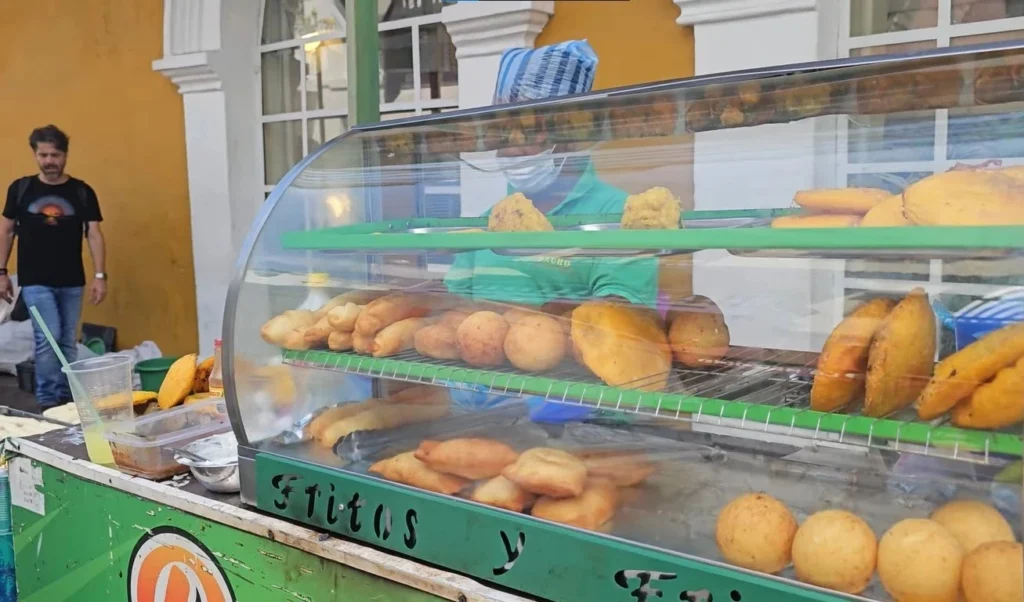
We’ve already seen how arepas are central to Colombian meals, especially breakfast. On the street, however, arepas are a completely different experience. Vendors sell them grilled, fried, or stuffed with cheese, eggs, or meat. In Bogotá, you’ll find simple buttered arepas, while on the coast, arepas come packed with fillings and fried to golden perfection. This street version is fast, hearty, and portable, perfect for Colombians on the go.
Empanadas – Fried or Baked Pastries
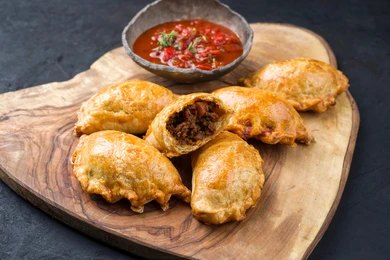
Empanadas are one of the most popular Colombian street foods, often filled with ground meat. Unlike the empanadas you might find elsewhere in Latin America, Colombian versions are often made with corn dough and filled with beef, chicken, or potatoes. They’re deep-fried until crispy and typically eaten with ají, a spicy Colombian sauce. In Medellín, it’s common to see vendors selling baskets of empanadas at bus stops, making them a true on-the-move meal.
Salchipapas – Street Food Classic

Salchipapas are Colombia’s answer to comfort fast food. This dish combines sliced sausages with French fries, drizzled in sauces like ketchup, mayonnaise, and sometimes garlic or pink sauce. While simple, it’s a favorite among students and late-night crowds. The dish reflects Colombia’s ability to take international foods (like fries and sausages) and give them a local twist.
Arepa de Huevo – Coastal Street Snack
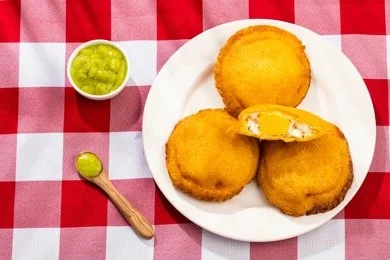
Unique to the Caribbean coast, arepa de huevo is a deep-fried arepa stuffed with an egg. Crispy on the outside and rich on the inside, it’s one of Colombia’s most beloved coastal snacks. Often eaten for breakfast or as a mid-morning bite, it shows how regional traditions add layers to Colombia’s food culture. If you visit Cartagena or Barranquilla, you’ll find vendors making them fresh on the street.
Buñuelos and Pandebonos – Cheese-Based Snacks
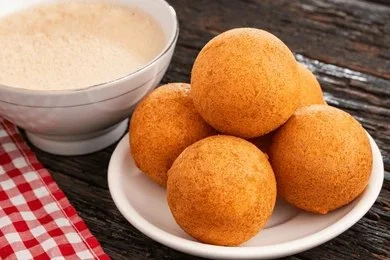
We’ve seen buñuelos and pandebonos appear in Colombia’s breakfast and snack traditions, but on the street, they become quick, affordable treats. Buñuelos are round fried cheese balls, crispy outside and soft inside, while pandebonos are chewy cheese breads made with cassava flour. Street vendors usually pair them with a cup of coffee or hot chocolate, making them an everyday indulgence.
Regional Specialties from Bogotá, Medellín, and Cartagena
Each Colombian city brings its own flavor to street food:
- Bogotá: Known for hearty soups, you’ll often find vendors selling ajiaco or changua in small eateries.
- Medellín: The city is famous for fried snacks like empanadas and arepas con queso, reflecting the hearty Paisa culture.
- Cartagena: The coast offers tropical flair with arepa de huevo, coconut rice, fried fish, and fresh fruit juices. Street stalls here are as much about the Caribbean lifestyle as they are about food.
What Are the Most Popular Colombian Dishes and Famous Foods?
Colombian food isn’t just about eating, it’s about sharing culture and tradition through every plate. Some dishes have become so iconic that locals proudly call them national treasures, while visitors often leave craving them long after their trip. Below are the most popular Colombian dishes that stand out both at home and internationally.
Colombia’s Favorite Food: Why Bandeja Paisa Tops the List
If there’s one dish that defines Colombia, it’s Bandeja Paisa. Often called the national dish, it’s a full platter that represents the hearty appetite of the Antioquia region. A traditional serving includes red beans, rice, ground beef, chorizo, plantains, avocado, a fried egg, and chicharrón (pork crackling) sometimes all on one overflowing plate.
What makes Bandeja Paisa so loved isn’t just the variety, but the way it reflects Colombian culture: generous portions, bold flavors, and food meant to be shared. Whether you try it in Medellín or a small town in the Andes, this dish tells you what Colombian cuisine is all about — hearty, authentic, and rooted in tradition.
Most Popular Soups: Ajiaco, Sancocho, and Caldo de Costilla
Colombians love their soups, and three in particular stand out as national favorites:
- Ajiaco. A creamy chicken soup from Bogotá made with three kinds of potatoes, corn, and the herb guasca. It’s comfort food for chilly Andean days.
- Sancocho – A rustic stew found all over Colombia, prepared with chicken, beef, or fish, plus yucca, plantains, and corn. Families often cook it together during weekends or holidays.
- Caldo de Costilla. A beef rib soup is often eaten for breakfast. Locals call it a hangover cure because of its rich, warming broth.
These soups are more than meals, they are a reflection of Colombia’s regional diversity. From the highlands to the coast, every spoonful carries a bit of local history.
Famous Colombian Foods from the Coast: Mojarra Frita & Coconut Rice
Head to Cartagena or Santa Marta, and you’ll quickly discover Colombia’s coastal specialties. One of the most famous is Mojarra Frita a whole fried fish served golden and crispy, often accompanied by patacones (fried plantains) and arroz con coco (coconut rice).
This pairing captures the Afro-Caribbean influences on Colombian cuisine. The sweetness of the rice balances the saltiness of the fish, while plantains add texture. It’s simple, fresh, and a must-try when you’re traveling along the Caribbean coast.
Typical Dishes of Colombia: Changua, Mondongo, and Sudado de Pollo
Beyond the coast and mountains, Colombia has everyday dishes that locals have cherished for generations:
- Changua A breakfast soup made with milk, scallions, and eggs. While unusual for visitors, it’s a beloved tradition in Bogotá and the Andean highlands.
- Mondongo A thick tripe soup that combines beef, pork, vegetables, and spices. Popular in Bogotá, this dish is often served with lime juice. Medellín and Antioquia, it’s a meal on its own.
- Sudado de Pollo A homestyle chicken stew simmered with tomatoes, potatoes, and herbs. It’s the kind of dish you’ll find at family tables across the country.
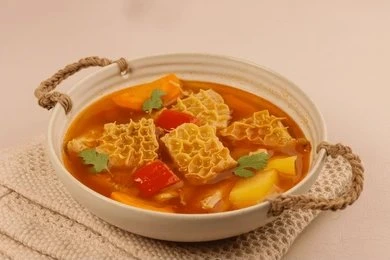
These are not just “recipes” they are part of daily life, connecting Colombians to their roots.
Colombia’s Famous Food in Festivals and Traditions
Food is central to Colombian celebrations, and some dishes shine brightest during festivals:
- Lechona (stuffed roast pork) is a highlight at festivals in Tolima.
- Buñuelos, fried cheese fritters, appear everywhere during Christmas.
- Street vendors selling arepas, empanadas, and salchipapas are staples at local fairs.
These traditions remind travelers that Colombian cuisine is about more than taste; it’s about community, history, and joy, often featuring ground meat.
Colombian Breakfast Foods and Everyday Staples
Breakfast in Colombia is never boring. From hearty soups in the Andes to cheesy breads in the valleys, mornings show off how diverse Colombian cuisine really is. While travelers might expect coffee and fruit, locals often start the day with comforting soups, freshly baked rolls, and of course, the ever-present arepas.
Changua – Breakfast Milk and Egg Soup
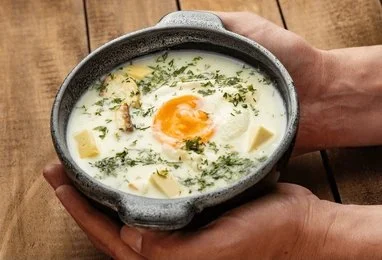
One of the most unique Colombian breakfast foods is Changua, a warm soup from Bogotá and the Andean highlands. Made with milk, scallions, and eggs gently poached in broth, it’s usually served with bread or arepas on the side.
For locals, Changua is more than food, it’s a tradition. Families enjoy it in the morning chill of the Andes, making it a comforting way to start the day. Travelers often find it unusual, but once you taste it, the rich mix of milk and herbs makes perfect sense in the Colombian climate, especially with carne dishes.
Caldo de Costilla – Morning Beef Rib Soup
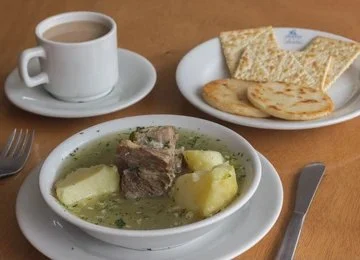
Another popular breakfast is Caldo de Costilla, a hearty beef rib soup simmered with potatoes, onions, and cilantro. It’s known as a levantamuertos (“wake-the-dead”) because it’s believed to cure hangovers.
You’ll often find Caldo de Costilla served early in the morning at small restaurants or by street vendors, especially in Bogotá. For Colombians, it’s both a comfort food and a natural remedy.
Almojábanas and Pandebonos – Morning Cheese Breads
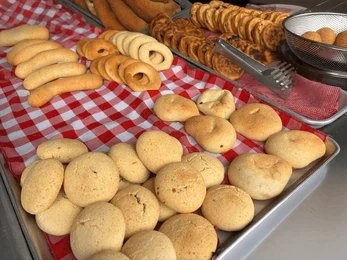
Colombia’s bakeries are full of cheesy delights, and two of the most loved are Almojábanas and Pandebonos.
- Almojábanas are soft, golden rolls made with corn flour and cheese.
- Pandebonos are slightly sweeter, round breads baked with yuca flour, eggs, and cheese.
Both pair perfectly with a cup of hot Colombian coffee or chocolate caliente (hot chocolate). Whether you’re in a bustling city like Cali or a small town in the Andes, you’ll always find these breads fresh in bakeries.
Arepas for Breakfast – A Colombian Tradition
No list of Colombian breakfasts is complete without arepas. These corn cakes are eaten in every region, though the style changes from place to place.
- In Antioquia, arepas are thin and often topped with butter or cheese.
- Along the Caribbean coast, you’ll find stuffed versions like Arepa de Huevo, fried with an egg inside.
- In Bogotá, arepas are softer and often paired with soups like Changua or Ajiaco.
Arepas are so common that many Colombians can’t imagine starting the day without them. They’re the true everyday staple of Colombian food culture.
Colombian Desserts and Sweet Treats to Try
Colombians have a sweet tooth, and dessert is more than just an afterthought. From creamy cakes to fruity street snacks, Colombian desserts highlight the country’s love for milk, sugar, fruits, and arequipe (caramel-like spread). Whether eaten during Christmas, family gatherings, or at local bakeries, these sweets reflect deep food traditions.
Tres Leches Cake – Colombia’s Favorite Dessert

Perhaps the most famous dessert in Latin America, Tres Leches Cake is beloved across Colombia. It’s a sponge cake soaked in three types of milk: evaporated milk, condensed milk, and cream.
Soft, moist, and incredibly sweet, it’s often topped with whipped cream or frosting. You’ll find Tres Leches in bakeries, restaurants, and even at birthday celebrations. It’s a perfect introduction to the sweetness of Colombian cuisine.
Postre de Natas – Traditional Cream Dessert
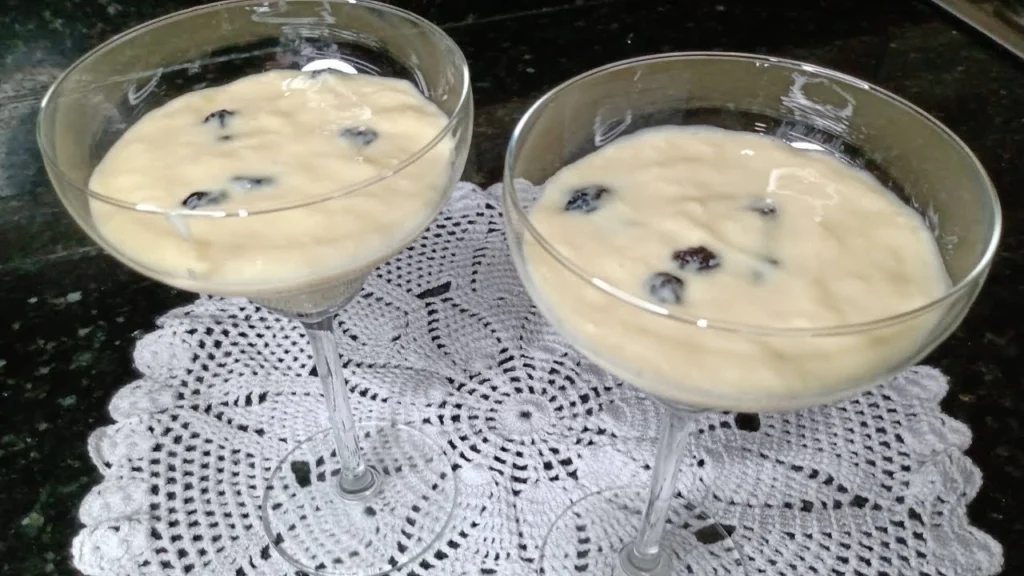
Postre de Natas is a truly Colombian creation. It’s made by skimming the cream from boiled milk, then mixing it with sugar, eggs, raisins, and cinnamon.
Rich and creamy, it has a texture similar to custard. Often homemade, it’s served during family gatherings and holidays, making it both a dessert and a tradition.
Milhojas – Layered Pastry with Arequipe
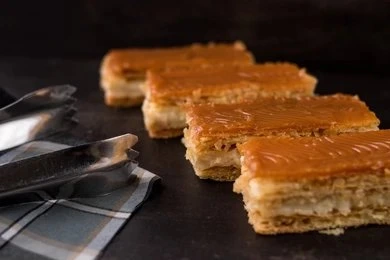
Inspired by French pastries, Milhojas in Colombia has its own twist. The name means “a thousand layers,” and this dessert stacks crispy pastry sheets with layers of arequipe, cream, and sometimes jam.
Dusted with icing sugar, Milhojas is a favorite in Bogotá and Medellín. It’s the perfect combination of crunch and sweetness, making it one of Colombia’s most popular bakery treats.
Cholado – Cali’s Shaved Ice Fruit Drink
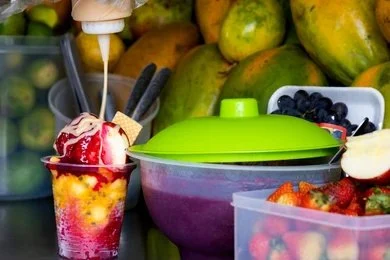
If you visit Cali, you must try Cholado, a colorful dessert-drink that’s as refreshing as it is sweet. It’s made with shaved ice, tropical fruits, condensed milk, and flavored syrups, then topped with wafers or cream.
Cholado is often sold at street stalls, especially during hot afternoons. It’s not just a dessert, it’s a part of Cali’s street culture and a reflection of Colombia’s tropical climate.
Brevas con Arequipe – Figs with Caramel
Another beloved Colombian sweet is Brevas con Arequipe. This simple yet indulgent dessert pairs figs (brevas) with rich arequipe (Colombian caramel).
The combination of fruity freshness and creamy caramel makes it a common treat at family dinners and holiday tables. It’s a classic example of how Colombians blend local fruits with their love of sweetness.
Colombian Food Culture and Traditions
Colombian food is not only about flavor, it’s about tradition, family, and celebration. Every meal reflects a regional identity, from the hearty soups of the Andes to the seafood stews of the Caribbean coast. Food in Colombia is deeply tied to festivals, holidays, and everyday life, showing how cuisine and culture blend together.
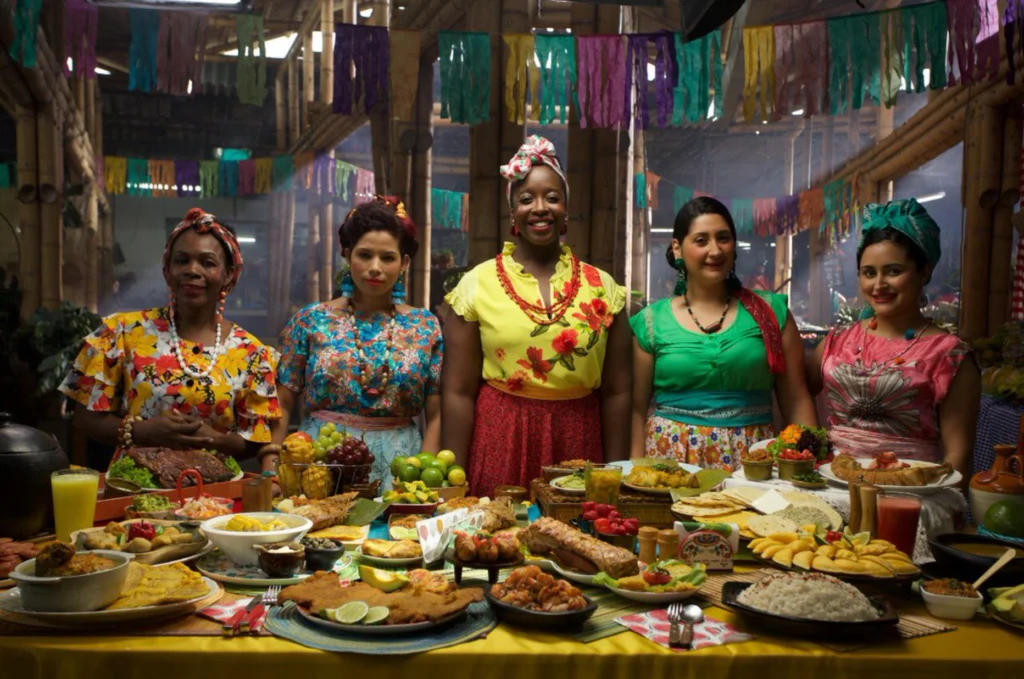
Colombia Food Traditions at Festivals and Holidays
Many of Colombia’s most famous dishes appear during festivals. For example:
- Lechona (stuffed roast pig) is prepared for Christmas and town celebrations.
- Buñuelos and Natilla are Christmas favorites, enjoyed with family and neighbors.
- Sancocho is often cooked outdoors during community events, symbolizing unity.
These traditions show that Colombian food is more than daily meals, it’s part of cultural celebrations and shared joy.
Family Meals and Social Gatherings Around Food
In Colombia, food always brings people together. Family gatherings often feature large dishes like Bandeja Paisa, Tamales Tolimenses, or Mondongo soup. Meals are a time for connection, storytelling, and celebrating life’s small moments.
Even in cities like Bogotá, Medellín, or Cartagena, eating out at local restaurants feels like joining a family table. Street vendors also play an important role, offering quick meals that still carry tradition and flavor.
Colombia’s Famous Foods Linked to Culture (Buñuelos, Lechona)
Some foods are inseparable from Colombian identity:
- Buñuelos represent Christmas traditions.
- Lechona symbolizes togetherness at large festivals.
- Arepas are so common that many Colombians say they can’t imagine a day without them.
Each dish reflects history, heritage, and regional pride.
How Colombian Cuisine Reflects Regional Identity
The Andes mountains bring hearty stews like Ajiaco and Caldo de Costilla.
The Caribbean coast blends seafood, coconut rice, and tropical fruits.
The Llanos (plains) are known for Ternera Llanera, a barbecued beef dish.
The Pacific coast highlights coconut milk stews and Afro-Colombian flavors.
This diversity makes Colombian food one of the most colorful cuisines in Latin America. It also shows how dishes in Colombian cuisine are beloved across Colombia. Spanish, Indigenous, and African influences combined to create something unique.
Colombian Drinks and Beverages That Define the Cuisine
Food and drink in Colombia go hand in hand. From the mountains of the Andes to the tropical Caribbean coast, Colombians enjoy beverages that reflect both tradition and daily life. Some drinks are part of morning routines, while others are tied to festivals, celebrations, and family meals.
Colombian Coffee – National Pride
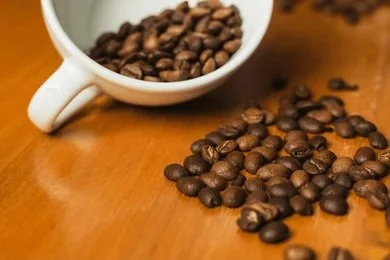
Colombia is world-famous for its coffee. Grown in the lush Coffee Region (Eje Cafetero), Colombian coffee is smooth, rich, and balanced. Coffee isn’t just a drink here — it’s part of daily culture. People sip a small cup of tinto (black coffee) at home, at work, or even from street vendors, often enjoyed alongside a side dish. For travelers, visiting a coffee farm shows how deeply coffee is tied to Colombian identity.
Aguardiente – Colombia’s Famous Drink

When it comes to celebrations, Aguardiente is Colombia’s iconic alcoholic beverage. This anise-flavored liquor is often shared at festivals, family gatherings, and parties. Each region has its own brand, and locals usually drink it straight, often passing around the same bottle among friends. For many Colombians, aguardiente represents joy, music, and togetherness.
Aguapanela – Traditional Sugarcane Drink
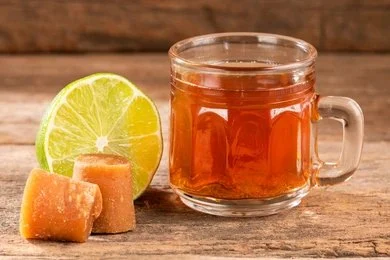
Aguapanela is a traditional drink made from panela (unrefined sugarcane blocks) dissolved in hot or cold water. It’s often served with cheese or bread and is especially popular in the Andes. Warm aguapanela is comforting on chilly mountain mornings, while cold versions are refreshing in hot climates. This drink is a true symbol of Colombian home life.
Fresh Fruit Juices – Everyday Colombian Beverages

Thanks to Colombia’s biodiversity, fresh fruit juices are everywhere. From lulo and guanábana to maracuyá (passion fruit) and mango, locals blend fruits into natural jugos (juices) made from fresh guava and lime. with either water or milk, or sometimes enhanced with lime juice. In coastal areas, juices with coconut milk or tropical flavors are common. For travelers, these juices are one of the easiest (and tastiest) ways to experience Colombia’s natural richness.
Final Thoughts: Why Colombian Food Belongs on Your South America Itinerary
Colombian cuisine is more than just meals and snacks; it’s a window into the country’s culture, history, and traditions. Every dish, from a hearty bandeja paisa to a sweet breva con arequipe, tells a story about the people and the regions they come from.
When you explore Colombia, food becomes part of the journey. Street vendors in Bogotá, seafood stalls in Cartagena, and bakeries in small towns all offer flavors that connect travelers with daily life. Dishes like ajiaco or sancocho reflect comfort and family gatherings, while festive meals like lechona and drinks like aguardiente show how food ties into celebrations.
For anyone planning a trip through South America, Colombian food deserves a special place on the itinerary. It’s hearty, colorful, and full of surprises. Sampling these dishes isn’t just eating it’s about understanding Colombia’s diverse landscapes, from the Andes mountains to the Caribbean coast.
So, whether you’re stopping for an arepa on the go, enjoying a bowl of ajiaco in the highlands, or sipping fresh fruit juice by the sea, you’ll discover that Colombian food is an essential part of the travel experience.
If Colombian food has sparked your travel appetite, you might be wondering where else in South America is safe to explore. To make planning easier, I’ve ranked the [Safest Countries to Visit in South America in 2025], so you can enjoy the best meals with peace of mind.
Frequently Asked Questions About Colombian Food
What kind of food is popular in Colombia?
During my travels in Colombia, I noticed how popular arepas, empanadas, and hearty soups like ajiaco are. In the Andes, families gather around a pot of sancocho, while on the Caribbean coast, fresh mojarra frita with coconut rice is a favorite. Food is both filling and social, often built around meat, plantains, rice, beans, and corn.
What is typical Colombian food?
A typical Colombian meal usually includes rice, beans, meat (like chicken or beef), fried plantains, and an arepa on the side. When I stayed in Bogotá, breakfast often started with tinto and a side of guava. caldo de costilla (beef rib soup) or changua (milk-and-egg soup). In smaller towns, I was welcomed with tamales Tolimenses, wrapped in banana leaves. These dishes reflect Colombia’s regional traditions and the importance of food in daily life.
What food is Colombia most known for?
The dish Colombia is most famous for is bandeja paisa, the national dish. When I first tried it in Medellín, I was amazed at the sheer variety on one plate: red beans, rice, ground beef, chicharrón, chorizo, fried egg, plantain, and avocado. Other iconic foods include ajiaco from Bogotá, lechona (roast pork stuffed with rice), and coastal dishes like cazuela de mariscos (seafood stew).
What is a popular Colombian street food?
One of the most popular Colombian street foods I tried was the arepa de huevo in Cartagena — a fried arepa stuffed with an egg inside. Street vendors also sell crispy empanadas with spicy ají sauce, salchipapas (fries mixed with sausage), and sweet treats like buñuelos or pandebonos. These foods are cheap, filling, and give you a true taste of Colombian street culture.
Is Colombian food spicy?
Surprisingly, Colombian food isn’t very spicy compared to Mexican or Peruvian cuisine. Most dishes focus on the natural flavors of fresh herbs, meats, and vegetables. That said, Colombians love adding a little kick with ají, a homemade hot sauce served on the side of empanadas and fritanga. When I traveled through Cali and Bogotá, I noticed ají was always available, but the base meals were mild and family-friendly.
What are the most popular Colombian snacks?
Colombians have a sweet tooth, and I loved how many snacks were easy to find in bakeries. Buñuelos (cheese fritters) and pandebonos (cheese bread) are everywhere, especially during Christmas. In the evenings, people snack on arepas with cheese, almojábanas, or tropical fruit juices. I even tried the adventurous hormigas culonas (roasted ants) in Santander — crunchy and nutty, definitely a unique Colombian snack!